
Volkswagen Polo Owners Manual: Brake fluid
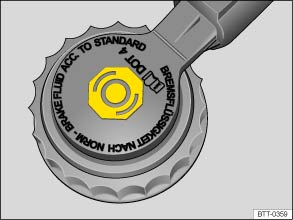
Fig. 117 In the engine compartment: cap on the brake fluid container
 First read and observe the introductory information
and safety warnings
First read and observe the introductory information
and safety warnings Brake fluid will gradually absorb water from the surrounding air. The brake system will be damaged if there is too much water in the brake fluid. The boiling point of the brake fluid is also considerably reduced by the water content. Heavy use of the brakes may cause a vapour lock in the brake system if the water content is too high. Vapour locks reduce levels of braking power, considerably increase braking distance and can even cause the brake system to fail completely. Your own safety and that of other road users depends on having a brake system that functions properly at all times .
Brake fluid specification
Volkswagen has developed a brake fluid that has been optimised for the brake system in the vehicle. To ensure optimal operation of the brake system, Volkswagen recommends the use of brake fluid compliant with VW standard 501 14.
Before using a particular brake fluid, check that the specifications printed on the container correspond to the vehicle requirements.
Brake fluid that is compliant with VW standard 501 14 is available from Volkswagen dealerships.
If this brake fluid is not available and it is necessary to use another high-quality brake fluid instead, brake fluid that is compliant with DIN ISO 4925 CLASS 4 or US standard FMVSS 116 DOT 4 can be used.
Not all brake fluids that are compliant with DIN ISO 4925 CLASS 4 or US standard FMVSS 116 DOT 4 have the same chemical composition. Some of these brake fluids may contain chemicals that can damage or destroy brake system components over time.
Volkswagen therefore recommends the use of brake fluid that is compliant with VW standard 501 14 to ensure sustained optimal operation of the brake system.
Brake fluid that is compliant with VW standard 501 14 fulfils the requirements of DIN ISO 4925 CLASS 4 or US standard FMVSS 116 DOT 4.
Brake fluid level
The brake fluid level must always be between the MIN and MAX marking on the brake fluid container or above the MIN marking .
The brake fluid level cannot be checked accurately in all models as engine components may partially conceal the brake fluid container. If the brake fluid level cannot be read exactly, please go to a qualified workshop.
The brake fluid level drops slightly when the vehicle is being used as the brake pads wear and the brakes are automatically adjusted.
Changing the brake fluid
The brake fluid must be changed as indicated in the service schedule ⇒ BookletService schedule, . The brake fluid should be changed by a qualified workshop. Volkswagen recommends using a Volkswagen dealership for this purpose. Only brake fluid that conforms with the required specification should be used.

 WARNING
- The brake system and brake fluid level must be checked regularly.
- The brake fluid should be changed regularly, according to the service schedule ⇒ BookletService schedule, .
- Heavy use of the brakes may cause a vapour lock if the brake fluid is left in the system for too long. Vapour locks reduce levels of braking power, considerably increase braking distance and can cause the brake system to fail completely.
- Please ensure that the correct brake fluid is used. Only use brake fluid that is explicitly compliant with VW standard 501 14.
- Any other brake fluid or a low-quality one can affect the functioning of the brakes and reduce their effectiveness.
- If a brake fluid compliant with VW standard 501 14 is not available, use a high-quality brake fluid compliant with DIN ISO 4925 CLASS 4 or the US standard FMVSS 116 DOT 4, but only in exceptional circumstances.
- The refilled brake fluid must be new.
WARNING
- In order to reduce the risk of poisoning, never use bottles or other containers to store brake fluid. These containers could encourage other people to drink out of them, even if they are labelled otherwise.
- Brake fluid must always be stored in its original sealed container and kept out of the reach of children.

 NOTICE

 Switching the TCS on and off
Fig. 116 In the centre console: button
for switching the TCS on and off manually
First read and observe the introductory information
and safety warnings The electronic stability control (ESC) ...

Other materials:
Tyre damage
First read and observe the introductory information
and safety warningsDamage to tyres and rims is often not readily visible.
Any unusual vibrations or signs that the car is pulling
to one side may indicate that one of the tyres is damaged .
Reduce your speed immediately if you suspect th ...
Spray Can Filling Device -VAS6425
Definition:
Spray Can Filling Device -VAS6425-
Product Description
The spray can filling device is a pneumatic,
maintenance-free dispensing device for filling spray cans with
mixed base paint ...
Blender
Definition:
Blender -LLS MAX 009-
Edition 10/2008
Product Description
The Blender -LLS MAX 009- matches the overlapping areas or
the edges from the existing paint to the new ...
