
Volkswagen Polo Owners Manual: Adjusting the steering wheel position
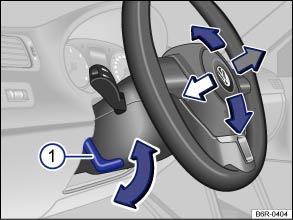
Fig. 41 Adjusting the steering wheel position mechanically
 First read and observe the introductory information
and safety warnings
First read and observe the introductory information
and safety warnings
Adjust the steering wheel position before setting off and only when the vehicle is stationary.
- Push down the lever .
- Adjust the steering wheel so that you can hold it on the outside of the ring (at the 9 o'clock and 3 o'clock positions) with both hands and slightly bent arms.
- Push the lever up firmly until it lines up with the steering column .

 WARNING
- After adjusting the steering column, always move lever up so that it engages securely. This prevents the steering column from moving spontaneously while the vehicle is in motion.
- Never adjust the steering wheel when the vehicle is in motion. If you determine that a readjustment is necessary, stop the vehicle safely and adjust the steering wheel to the correct position.
- The steering wheel must always point towards the chest and not towards the face. This ensures that the driver front airbag provides maximum protection in the event of an accident.
- While driving, always keep both hands on the outside of the steering wheel, at the 9 o'clock and 3 o'clock positions. This reduces the risk of injury if the driver front airbag is triggered.
- Never hold the steering wheel at the 12 o'clock position, or in any other manner, e.g. on the hub of the steering wheel. If the driver airbag is triggered, you could receive severe injuries to the arms, hands and head.
 Removing and fitting head restraints
First read and observe the introductory information
and safety warnings
Every seat is fitted with a head restraint. The centre rear head restraint is
designed solely for use with the centre rear ...
 Centre armrest
Fig. 42 Front centre armrest
First read and observe the introductory information
and safety warnings
To lift, pull the centre armrest up gradually in the direction of the
arrow .
To lower, pu ...
Other materials:
Driving with an open tailgate
First read and observe the introductory information
and safety warnings
Driving with an open tailgate is particularly dangerous. Ensure that the open
tailgate and any objects are secured properly, and take appropriate measures to
reduce the quantity of toxic exhaust fumes entering the vehicle ...
Evaporator Vent Temperature Sensor -G263- or Evaporator Temperature Sensor
-G308
Function:
The Evaporator Vent Temperature Sensor -G263- or Evaporator
Temperature Sensor -G308- determines the temperature behind the
evaporator. This value goes to the air conditioning control
module and serves as a reference signal for ...
Battery Tester Charger Kit -GRX3000VAS- General Description
Only Volkswagen approved chargers may be used to charge
batteries in Volkswagen vehicles. Only the Battery Tester
Charger Kit -GRX3000VAS- charger is used in the USA and Canada.
The Battery Tester Charger Kit -GRX3000VAS- battery charger
...
