
Volkswagen Polo Owners Manual: Checking the electrolyte level of the vehicle battery
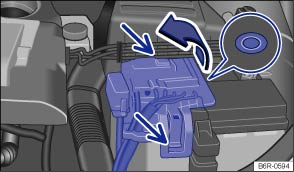
Fig. 141 In the engine compartment: removing the vehicle battery cover
 First read and observe the introductory information
and safety warnings
First read and observe the introductory information
and safety warningsThe electrolyte level of the vehicle battery should be checked regularly in high-mileage vehicles, in hot countries and in older vehicle batteries. The vehicle battery is otherwise maintenance-free.
Vehicles with a start/stop system are fitted with special vehicle batteries. For technical reasons, it might not be possible to check the electrolyte level in these vehicle batteries.
In vehicles with the vehicle battery in the spare wheel well, it is not possible to check the electrolyte level without first removing vehicle parts. Seek expert assistance.
Preparations for vehicles with the battery in the engine compartment
- Preparing the vehicle for working in the engine compartment .
- Open the bonnet
 .
.
Pushing the cover aside
Depending on the engine fitted to the vehicle, the vehicle battery cover may have a different design:
- Push the tabs (thin arrows) away from the vehicle battery using a screwdriver if necessary, and push the cover to the side in the direction of the arrow (thick arrow).
Checking the electrolyte level
- Ensure that enough light is available for you to see the colours clearly. Never use naked flames or glowing matter (e.g. cigarettes) as a light source.
- The colour display in the round window on the top side of the vehicle battery will change according to the electrolyte level (magnification).
| Colour display | Action |
|---|---|
| Light yellow or without colour | The electrolyte level of the vehicle is too low. The vehicle battery should be checked and replaced by a qualified workshop if necessary. |
| Black | The electrolyte level of the vehicle battery is correct. |

 WARNING
- Always wear eye protection and protective gloves.
- Electrolyte is very aggressive. It can burn the skin and can cause blindness. When working with the battery, ensure that your hands, arms and face in particular are protected from acid spillages.
- Never tilt the vehicle battery. Electrolyte may spill out of the battery vents and cause chemical burns.
- Never open a vehicle battery.
- If acid is splashed onto your skin or into your eye, rinse immediately for several minutes with cold water. Then consult a doctor immediately.
- If acid is swallowed, consult a doctor immediately.
 Warning lamp
First read and observe the introductory information
and safety warnings
Lit up
Possible cause
Solution
Fault in the alternator.
Go ...
 Charging, replacing, disconnecting and connecting the vehicle battery
First read and observe the introductory information
and safety warningsCharging the battery
The vehicle battery should be charged by a qualified workshop, as the technology
used in factory-fitted ...
Other materials:
Mounting Damage
Bundle broken during tire inflation.
Modern radial car tires are mounted only on safety rims.
These have a hump -1- running along
the shoulders.
1 -
Hump (H2)
...
Engine oil specification
First read and observe the introductory information
and safety warningsThe engine oil used must correspond exactly to specifications.
The correct engine oil is important for the function and service life of the
engine. A special high quality multigrade oil has been filled at the factory and
t ...
Hub Cap for Alloy Wheels with Open Threaded Connection, Removing and
Installing
Removing
The wheel is removed.
Note
Hold the cap secure -1- with
the hammer.
Installing
...
