
Volkswagen Polo Owners Manual: What happens to vehicle occupants who have not fastened their seat belts
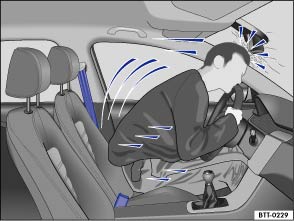
Fig. 47 An unbelted driver is thrown forwards
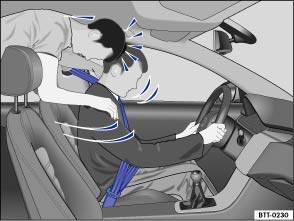
Fig. 48 The unbelted rear passenger is thrown forwards, hitting the belted driver
 First read and observe the introductory information
and safety warnings
First read and observe the introductory information
and safety warnings
Many people believe that they can brace their weight with their hands in a minor collision. This is not true.
Even at low speeds, the forces acting on the body in a collision are so great that occupants cannot brace themselves with their arms and hands. In a frontal collision, unbelted vehicle occupants are thrown forwards and will make unchecked contact with parts of the vehicle interior, e.g. the steering wheel, dash panel, or windscreen .
The airbag system is not a substitute for the seat belts. When triggered, the airbags only provide additional protection. Airbags are not triggered in all kinds of accidents. Even if the vehicle is equipped with an airbag system, all vehicle occupants, including the driver, must fasten their seat belt and wear it correctly while the vehicle is in motion. This reduces the risk of severe or fatal injuries in the event of an accident – regardless of whether an airbag is fitted for the seat.
Each airbag can only be triggered once. To achieve best possible protection, seat belts must always be worn properly. This also ensures that protection is provided in accidents in which the airbag is not triggered. Any vehicle occupants not wearing a seat belt can be thrown out of the vehicle and sustain more severe or even fatal injuries as a result.
It is also important for the rear seat occupants to wear seat belts properly, as they could otherwise be thrown forwards violently in an accident. Rear passengers who are not wearing seat belts endanger not only themselves and the driver, but also other people in the vehicle .
 Frontal collisions and the laws of physics
Fig. 45 Unbelted occupants in a vehicle
heading for a brick wall
Fig. 46 Unbelted occupants in a vehicle
striking a brick wall
First read and observe the introductory information
and safety ...
 Seat belt protection
Fig. 49 Driver restrained by a properly
positioned seat belt during a sudden braking manoeuvre
First read and observe the introductory information
and safety warnings
Correctly fastened seat be ...
Other materials:
Polyurethane Adhesive Sealant
Definition:
Polyurethane Adhesive Sealant -AKD 476 KD5 05-
Edition 04/2009
Product Description
Polyurethane Adhesive Sealant -AKD 476 KD5 05- is a
paste-like, one-part adhesi ...
Vibration, Vibration Control System
Expanded functions can be performed using Hunter RFT33VAG
Road Force Touch™ Wheel Balancer -VAS6230B4- in addition to the
previously known balancers.
A special characteristic of this system is testing the
radial force of wheel/tire dur ...
Warning lamp
First read and observe the introductory information
and safety warnings
Lit up
Possible cause
Solution
The tailgate is open or not properly closed.
Do not drive on!
Open the tailgate and close it again.
Several warning and ...
